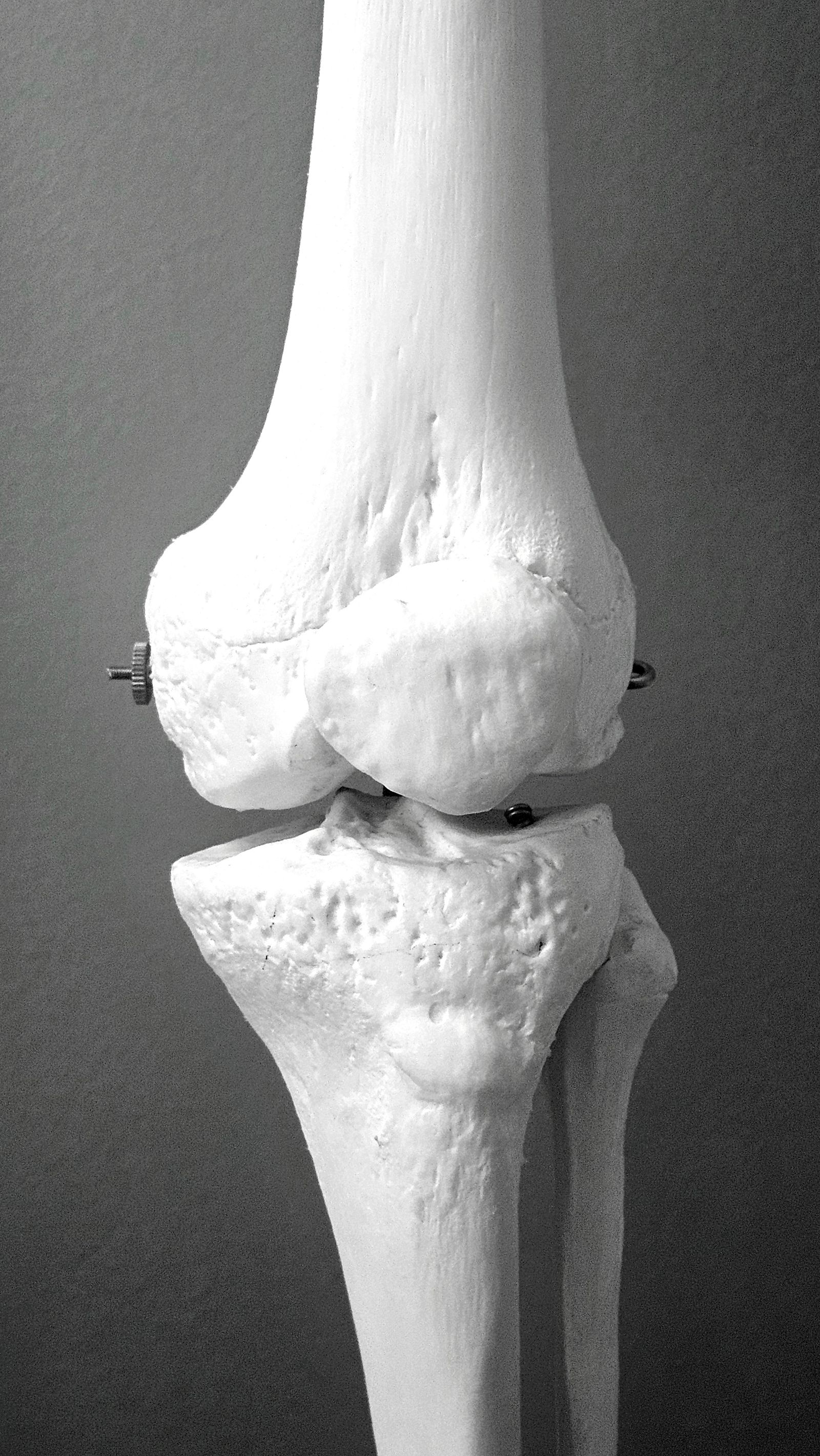
In 2023, a randomised controlled trial published in Wien Klin Wochenschr presented a result worth paying attention to.
Researchers gave 39 women with knee osteoarthritis either 40mg/day of Collavant® n2, a native undenatured type II collagen, or a structured exercise intervention, over 6 weeks.
The Collavant n2 group saw a 44.8% improvement in WOMAC pain score, a result comparable to the exercise intervention, at a dose most people would assume is too small to do anything at all.
40mg
Collavant n2 dose used in the 2023 trial
44.8%
Improvement in WOMAC pain score
6 weeks
Trial duration — comparable to a structured exercise program
39
Women with knee osteoarthritis in the RCT
More collagen is not better collagen. The mechanism that works requires 40mg of a structurally intact protein — not 10,000mg of an ingredient that has been processed into something categorically different.
The Transparency Standard: What Labels Should Tell You But Usually Don't
Before the mechanism, a note on quality — because even the right ingredient at the right dose is useless if it isn't actually what the label says.
The supplement industry in India is largely unregulated for potency verification. The way to verify is to look for three things on any joint supplement:
✓
Third-party Certificate of Analysis (COA): A document showing that an independent laboratory tested the product for identity, potency, and purity. If a brand doesn't publish this, you have no way to verify what's actually in the capsule. Ask for it.
✓
Trademarked ingredient forms: Aflapin®, Collavant® n2, CurQlife® — these trademarks indicate the ingredient was sourced from the manufacturer that conducted the clinical trials and has quality standards attached to it.
✓
Individual doses listed: Not a proprietary blend. If the label says 'joint health complex 500mg' without listing individual doses, the formula could contain 490mg of glucosamine and 10mg of everything else. Transparency means every ingredient, every dose, independently listed.
The Fundamental Distinction: Why Collagen Type Matters More Than Dose
The supplement market has aggressively marketed collagen for the past decade. Walk through any pharmacy and you will find collagen powders at 5,000mg to 15,000mg per serving, positioned for joint health. Almost all of it is hydrolysed collagen — collagen that has been broken down into amino acids through heat treatment.
Hydrolysed Collagen (10,000mg+)
Broken down into amino acids. Acts like a protein supplement. Some evidence for skin and hair. Limited and inconsistent evidence for joint cartilage.
VS
Undenatured Collavant n2 (40mg)
Structurally intact. Works through oral immune tolerance via Peyer's patches. 40mg is the clinically validated dose. More is not better — higher doses can impair the mechanism.
Undenatured type II collagen is categorically different. It is structurally intact collagen — not broken down, not heat-treated, not converted to amino acids. The two products share a category. They share almost nothing else.
The Oral Tolerance Mechanism: How 40mg Changes What Your Immune System Does
The gastrointestinal tract has a sophisticated immune surveillance system centred on Peyer's patches — lymphoid tissue in the small intestinal wall that continuously samples what passes through the gut and trains the immune system about what to tolerate.
1
40mg of intact Collavant n2 passes through the gut
→
2
Peyer's patches present it to regulatory T-cells (Tregs)
→
3
Tregs learn to recognise type II collagen as 'self' tissue
→
4
Tregs migrate to joint tissue and support cartilage
This is called oral tolerance induction. It is an established immunological mechanism — the same principle underlying oral immunotherapy for allergies. The critical detail most product descriptions omit: the dose must be small enough to induce tolerance rather than trigger an immune response. 40mg is the dose established by clinical research. Higher doses do not produce stronger effects.
Collavant n2 doesn't build cartilage. It changes what your immune system does to the cartilage you already have. That is a categorically different — and more powerful — intervention.
Why Glucosamine and Chondroitin Fell Short: The Evidence Trail
The GAIT trial (Glucosamine/Chondroitin Arthritis Intervention Trial) — US NIH-funded, 1,500+ patients — found that neither glucosamine nor chondroitin alone, nor in combination, reduced pain significantly better than placebo across the overall population. Cochrane meta-analyses in 2010, 2015, and 2022 reached similar conclusions.
RCT
Wien Klin Wochenschr (2023) — The Collavant n2 Trial
39 women with knee osteoarthritis, 6-week randomized controlled trial. 40mg/day Collavant n2 produced a 44.8% improvement in WOMAC pain score, comparable to a structured exercise intervention.
RCT
Maheshwari et al. (2026) — Combined with Aflapin
100 subjects, 12-week study. The same 40mg Collavant n2 + 100mg Aflapin combination used in Humyn Mobility significantly improved joint pain, stiffness, and overall status.
Observational
2022 Multicentric Study
40 patients, 3 clinical sites, 90 days. The Collavant n2 + Aflapin combination produced a 73% reduction in pain scores and 76% reduction in WOMAC scores, with benefits from day 5.
Why It's Combined With Aflapin, Not Just Sold Alone
Most multi-ingredient joint formulas combine ingredients that were each studied alone, never as the actual combination on the label. Two ingredients that each work individually don't automatically work well together — they can compete for absorption, or simply never have been tested as a pair. Collavant n2 and Aflapin, at Humyn Mobility's exact doses, are the exception: both studies above tested them together, not apart, which is a meaningfully stronger evidence base than the zero combination studies most joint blends can point to.
The case for pairing them isn't just that they happened to get studied together — their mechanisms are complementary across two different timeframes. Aflapin's 5-LOX inhibition addresses active inflammation, the pain and swelling that make joints hurt right now, with effects measurable from day 5. Collavant n2's oral-tolerance mechanism, described above, works on a slower, structural timescale, with its fullest effect building through 12 weeks. One covers the near-term symptom while the other works on the underlying mechanism.
Worth being honest about: the 2022 study was observational, not blinded, a weaker design than the 2026 RCT, and 140 total subjects across both combination studies is a real evidence base but still small next to large pharmaceutical trials. Neither study was independently funded — combination-ingredient research is generally funded by the ingredient manufacturers themselves, which is standard for the branded-ingredient industry but worth naming rather than omitting.
What to Look For on Any Collagen Label — An Indian Consumer's Guide
✓
Undenatured or native type II collagen. If the label says hydrolysed, collagen peptides, or simply collagen, it is not this category. Structurally different products with different mechanisms.
✓
Dose close to 40mg. If a product says 5,000mg or 10,000mg of type II collagen, it is hydrolysed. Undenatured collagen works at 40mg because the mechanism is immunological, not substrate-based.
✓
Collavant® n2 trademark. Indicates sourcing from a licensed manufacturer (Bioiberica) with an established clinical trial pedigree and manufacturing standards.
✓
Native collagen source. Check the specific clinical evidence for whichever branded ingredient a product uses — different suppliers, different trials, different doses.
The Blueprint Principle: How to Know If It's Working
The most important question most supplement guides never answer: how do you actually know if what you're taking is making a difference?
Day 0
Baseline
Set your starting point
Run a CRP blood test (₹600–₹1,200 at major labs). Note morning stiffness duration and physical activity tolerance.
D5
Day 5
First relief
Published combination trials measured the first joint-comfort improvements here.
Wk4
Week 4
Significant improvement
The 12-week published study of 100 adults recorded significant improvement by week 4.
Wk12
Week 12
Re-test CRP
Re-run the CRP blood test. Objective confirmation the mechanism is working. A 90-day minimum course is recommended.
Key Takeaways
✓
Collavant n2 at 40mg produced a 44.8% WOMAC pain score improvement in a 2023 RCT, comparable to a structured exercise program.
✓
The mechanism is oral immune tolerance via Peyer's patches — not amino acid supplementation. The dose is 40mg because that is what the mechanism requires. Higher doses do not produce a stronger effect.
✓
Hydrolysed collagen and undenatured collagen are not interchangeable. Different structure, different mechanism, different evidence base.
✓
Glucosamine and chondroitin have not shown consistent clinical benefit in large, well-controlled trials. The mechanism-specific alternatives have more robust, more recent, and more consistent evidence.
✓
Collavant n2 is combined with Aflapin because the two mechanisms are complementary, fast anti-inflammatory plus slow structural support, and because that specific combination, not just each ingredient alone, has been tested twice in published research.
✓
Demand transparency. Third-party COA, trademarked ingredients, individual doses on the label.
Frequently Asked Questions
Q. If this collagen is at a lower dose, why is it not in every joint supplement in India?
Cost and communication. Undenatured collagen requires a cold-process manufacturing technique that preserves the three-dimensional protein structure. This is more expensive than standard hydrolysis. The mechanism also requires explanation: 40mg of collagen is a harder retail sell than 10,000mg in a market where consumers equate higher numbers with better value.
Q. I take a beauty collagen supplement. Is that also working on my joints?
No. Beauty collagen products use type I collagen, which is the primary collagen in skin, hair, and nails. Joint cartilage uses type II collagen. These are different proteins with different tissue distribution and different clinical evidence bases. They should not be considered interchangeable or additive for joint health.
Q. How long before I notice a difference specifically from Collavant n2?
The oral tolerance mechanism takes longer to establish than Aflapin's anti-inflammatory effect. In the published combination trials, benefits build from day 5 through week 12. A full 90-day course is the minimum meaningful window. Testing morning stiffness duration weekly and running a CRP test at baseline and week 12 gives you objective data.
Q. Can I verify the collagen content in a product before buying?
Yes. Ask the brand for the Certificate of Analysis (COA) from a third-party testing laboratory. This document should show the actual measured content of each ingredient. Reputable brands publish COAs proactively or provide them immediately on request.
Q. Does combining Collavant n2 with Aflapin mean I get double the individual effects?
No, and we wouldn't want to imply that. The combination studies measured the two ingredients taken together as a single intervention, not the sum of each ingredient's separately-studied effects. The complementary-mechanism idea, fast anti-inflammatory plus slow structural support, is what these studies were designed to test, not an additive multiplier.
Q. Does this work for all types of joint problems?
The strongest evidence is for knee osteoarthritis and joint discomfort in adults. The oral tolerance mechanism is specific to type II collagen, which is the collagen in articular cartilage. It is less directly relevant for joint issues driven primarily by tendon or ligament damage (which involves type I collagen) or by acute injury.
Written for Humyn Health · The Journal
Category: The Science · Suggested reading time: 12 minutes